Handyman, Renovation & Demolition Services in East Brunswick Township.
For a home repair, renovation or selective demolition request in East Brunswick Township, Middlesex County, New Jersey, send the property address, project details and clear photos. Quick Handyman Services will review the location, scope and scheduling availability before any visit is arranged.
East Brunswick's history reaches back to settlements connected by Lawrence Brook, the South River and the roads between colonial communities. Farms and small landings developed before the township was organized. The municipal history describes settlers of Scottish, English, Dutch and German backgrounds and a landscape gradually divided into smaller agricultural holdings. Its account also explains the importance of the historic village called Old Bridge on the South River. That village lies in East Brunswick and should not be confused with the separate municipality now named Old Bridge Township.
From river traffic to local industry
Water transportation linked farms and manufacturers with larger markets. The 1921 county history describes merchants, docks and goods moving through the South River area, including government freight during the War of 1812. Wood, clay and other materials supported businesses beyond agriculture. The same account records neighborhood stores, taverns, mills and artisans, showing how the river valley functioned as a network of working settlements. Those activities explain why old roads and village names can remain significant even after the surrounding countryside has changed.
The township and its changing boundaries
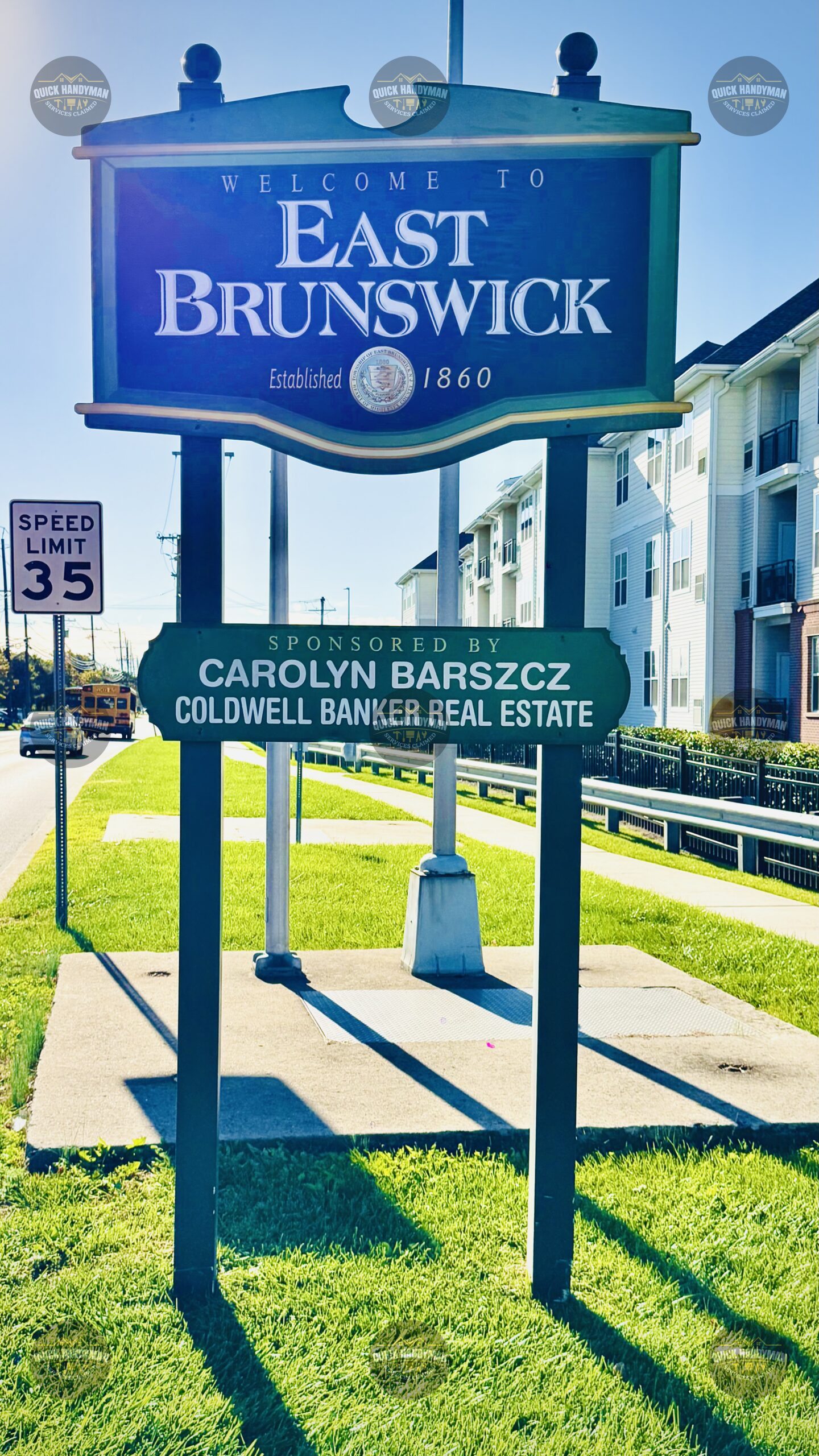
East Brunswick was formed in 1860 from portions of North Brunswick and Monroe. Its original territory included places that later developed separate municipal governments. Washington became South River Borough in 1898; Helmetta and Spotswood also separated, and territory was transferred to Milltown. These changes matter when reading older records: a nineteenth-century reference to East Brunswick can describe land outside today's township. The surviving municipality grew out of that larger district, rather than appearing fully formed with its present boundaries.
Schools, farms and neighborhood memory
The county history gives considerable attention to the institutions that supported everyday life: schools, places of worship, burial grounds and routes between farms and market towns. They show a community organized around several neighborhoods rather than one single founding site. The township's own historical account adds the DeHart family homestead and the landscape associated with today's Bicentennial Park. Reading these places together helps explain East Brunswick's development from a rural and river-connected district into a modern township while keeping the stories of its earlier villages visible.