History of Aberdeen Township, New Jersey
Native American roots and early settlement
The history of the land now known as Aberdeen Township begins long before its incorporation. The area formed part of the homeland of the Lenni Lenape, whose communities used the waterways and surrounding landscape for food, transportation and agriculture.
European settlement gradually changed the region during the seventeenth century. The township’s official history records a Dutch attempt to acquire land along the southern shore of Raritan Bay in 1650, although no permanent Dutch settlement followed there. Later colonial settlement contributed to the development of farms, roads and communities around the bay and local creeks.
The creation of the township in 1857
The municipality was incorporated on February 23, 1857, from part of Raritan Township. Its original legal name was Matavan Township. The spelling later became Matawan Township in 1882.
These earlier names are important when researching local records. Documents describing Matawan Township often concern the municipality now called Aberdeen, rather than only neighboring Matawan Borough. The borough became a separate municipality in 1895, while the surrounding township continued its own development.
Cliffwood and Cliffwood Beach
Cliffwood and Cliffwood Beach represent important parts of the township’s history. A centennial history published in 1957 describes Cliffwood Beach as a wooded shoreline area used for camping, picnics, bathing and winter skating on nearby Treasure Lake.
A major development phase began when the Cliffwood Beach Company purchased a tract in 1923. The following year, lots were offered for summer cottages and year-round homes. This helped transform the waterfront from a recreational destination into a growing residential community.
During the twentieth century, Cliffwood Beach also became known for its resort attractions. The Matawan Historical Society documents its popularity beginning in the 1920s and the later storm damage that disrupted that resort era.
Schools and community development
The history of Cliffwood School illustrates how local institutions grew alongside the township. Historical research identifies an early schoolhouse in the area by the middle of the nineteenth century. In 1855, land was purchased for the school at a site that became part of the present school campus.
A brick school building opened in 1912, followed by an addition in 1922 and further classroom expansion in the early 1950s. Memorial School opened in 1959. Although the older brick building was demolished in 2013, its dated Cliffwood School parapet was preserved as a memorial.
These successive buildings reflect the continuing importance of education to generations of township families.
The suburban transformation
Residential development brought another major change during the twentieth century. Strathmore became an important part of the township’s suburban identity through development associated with Levitt & Sons.
Oral histories preserved by the Matawan Aberdeen Public Library describe families moving into the area, including arrivals from New York, and residents witnessing changes in roads, schools, shopping areas and neighborhood life. These personal accounts help document how the township evolved beyond its earlier rural and waterfront communities.
A new name in 1977
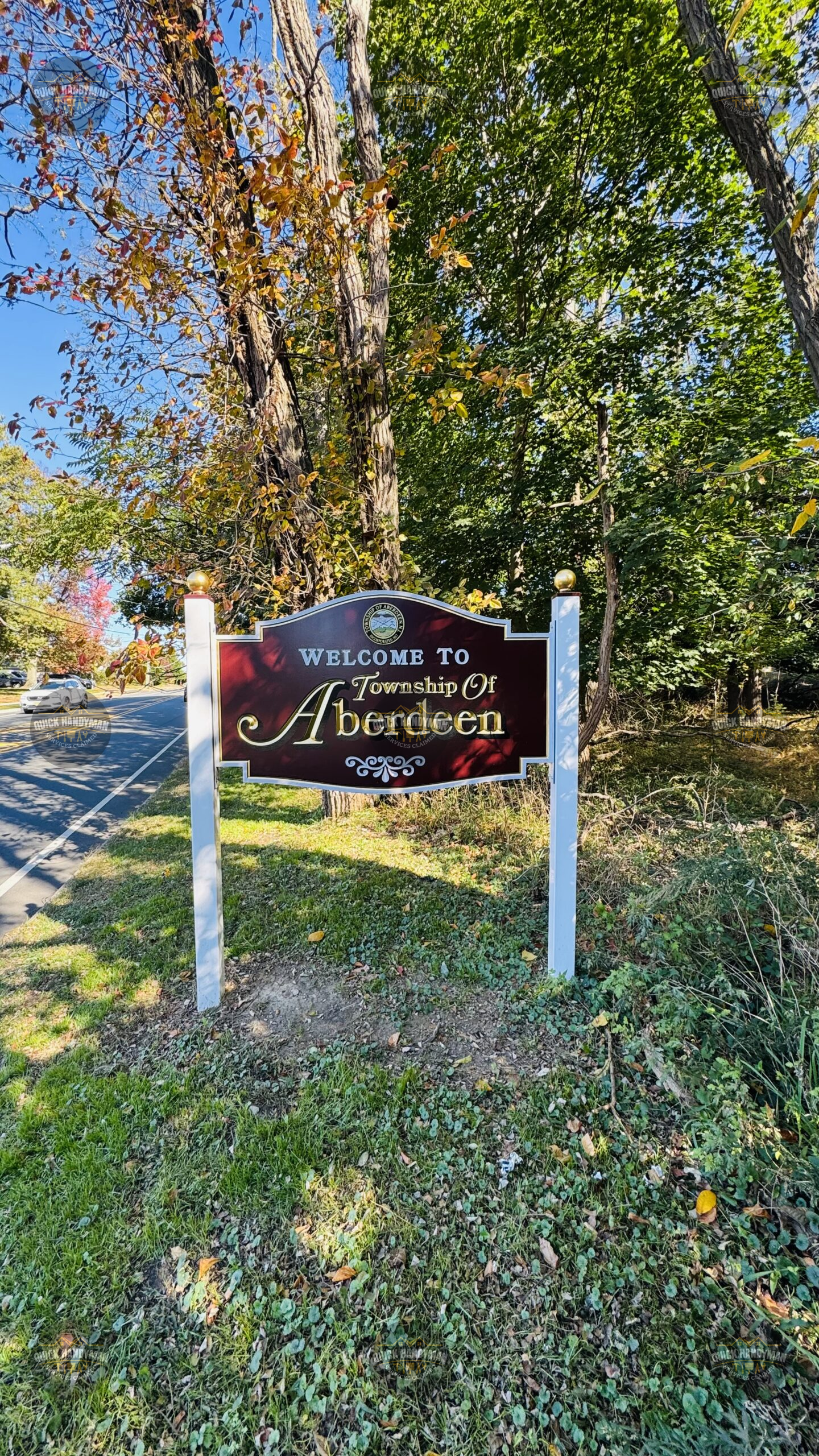
On November 8, 1977, residents voted to rename Matawan Township as Aberdeen Township. The change established a clearer identity separate from Matawan Borough.
The renaming did not create a new municipality. It gave an existing township a new name, which is why both 1857 and 1977 are central to its history.
Preserving the township’s story
Aberdeen’s heritage includes several distinct neighborhoods rather than a single historic center. Cliffwood, Cliffwood Beach, Freneau, Oakshades, River Gardens, Strathmore and Woodfield each contribute to the township’s broader identity.
Local historical research, school records and recorded memories preserve connections between its coastal landscape, older settlements and suburban neighborhoods. Together, they tell the story of a municipality shaped by changing names, community institutions, residential growth and generations of residents.