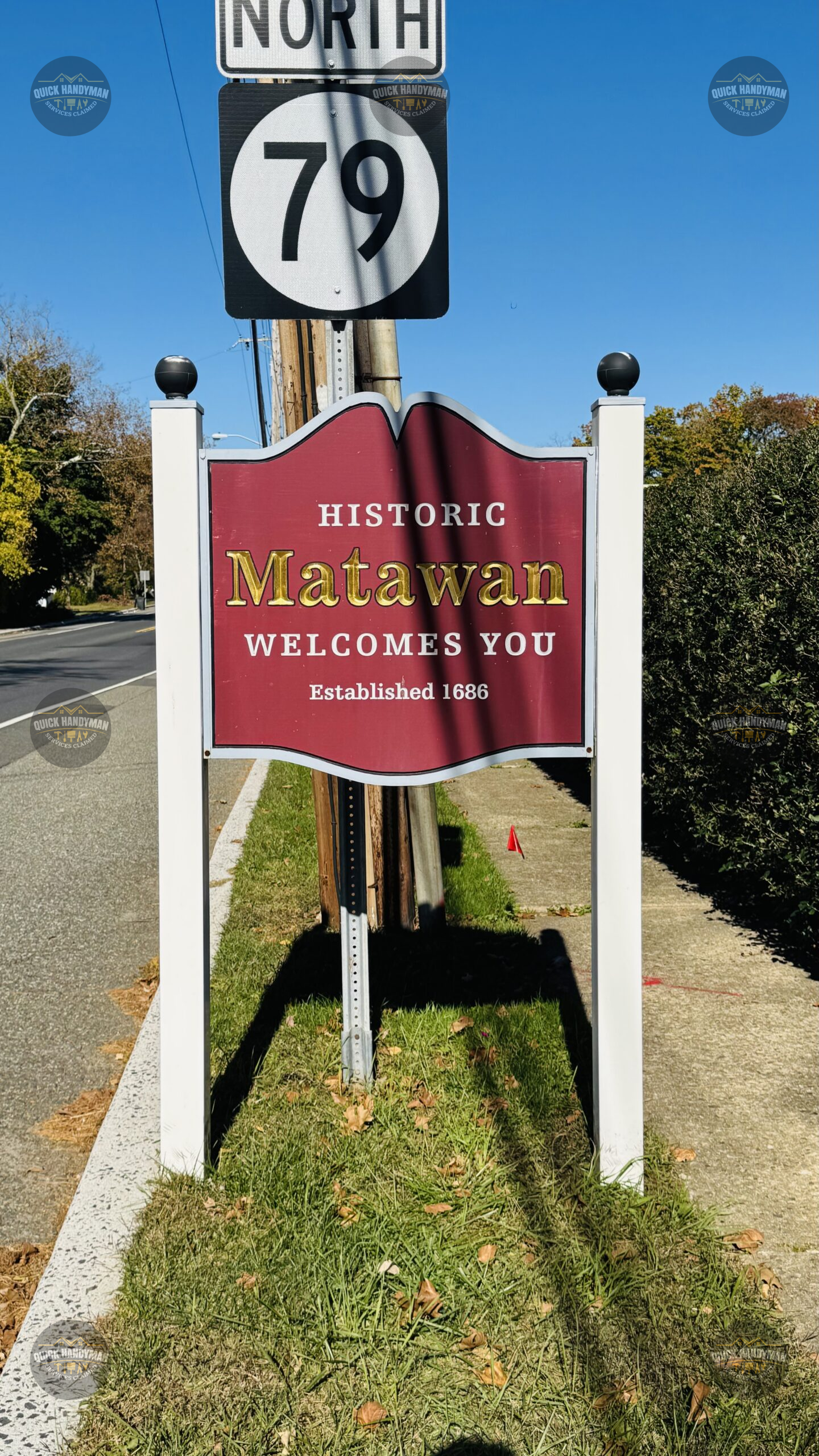
History of Matawan Borough, New Jersey
Colonial beginnings
Matawan’s settlement history reaches back to the late seventeenth century. Around 1686, Scottish Presbyterian settlers established a community near the intersection of two existing Native American trails. Known first as New Aberdeen and later as Mount Pleasant, the early settlement developed near what is now the junction of Main Street and Freneau Avenue.
A Presbyterian meetinghouse and a small collection of homes formed the beginnings of the community. Over time, its growth became closely connected with the nearby creek and the opportunities that water transportation provided.
Middletown Point and maritime commerce
Docks along Matawan Creek helped establish the trading community known as Middletown Point. Sailing vessels carried agricultural products, other goods and passengers between the area, New York and northern New Jersey.
By the middle of the eighteenth century, the settlement had become an important shipping center for Monmouth County. Commercial activity gradually shifted the community’s center northward toward the present downtown. Merchants and tradespeople established homes along Main Street, where surviving early buildings and later Victorian houses continue to reflect different stages of Matawan’s development.
Burrowes Mansion and the Revolutionary War
One of Matawan’s most important surviving landmarks is Burrowes Mansion at 94 Main Street. Built in 1723 by John Bowne III, the house was purchased in 1769 by grain merchant John Burrowes Sr., remembered locally as the “Corn King.”
The Burrowes family supported American independence. John Burrowes Sr. supplied provisions to the Continental Army, while his son helped organize local military forces and served as an officer. The property was associated with military preparation during the Revolution, and in 1778 it became the scene of a confrontation involving Patriots and Loyalist forces.
The mansion provides a tangible connection between Matawan’s commercial history and the struggle for independence.
Becoming an independent borough
Matawan Borough was established on June 28, 1895, from part of Matawan Township. This municipal milestone came more than two centuries after the beginnings of the settlement.
The distinction between borough and township is important when researching local history. The former Matawan Township is now Aberdeen Township, while Matawan Borough remains a separate municipality. Older records may therefore refer to a wider area than the borough’s present boundaries.
Community institutions and the public library
Matawan’s history also includes the efforts of residents to establish lasting educational and cultural institutions. The first official Matawan Free Public Library opened in 1903 in a former railroad express office on Main Street.
Volunteers staffed the library, and donations from residents and local organizations helped build its collection. In 1921, the library moved into a nineteenth-century cottage at Park and Main Streets. Its development illustrates how community participation helped create public resources alongside the town’s commercial growth.
The Matawan Creek shark attacks of 1916
On July 12, 1916, Matawan Creek became the location of three shark attacks during the wider series of incidents along the New Jersey coast that summer. Lester Stillwell and Stanley Fisher died; Joseph Dunn survived.
Fisher entered the creek while searching for Stillwell and was attacked during that effort. The tragedy became a significant chapter in Matawan’s history and continues to be documented by local historians.
Preserving Matawan’s heritage
Burrowes Mansion later served several purposes, including use as a hotel, restaurant and private residence. In 1974, the borough purchased the property from the Herrick family with the understanding that it would become a museum.
Together, the mansion, historic Main Street buildings, library collections and local historical research preserve a broader story of Matawan: a colonial settlement that developed into a shipping center, experienced the Revolutionary War, established an independent municipal identity and continued building community institutions across generations.