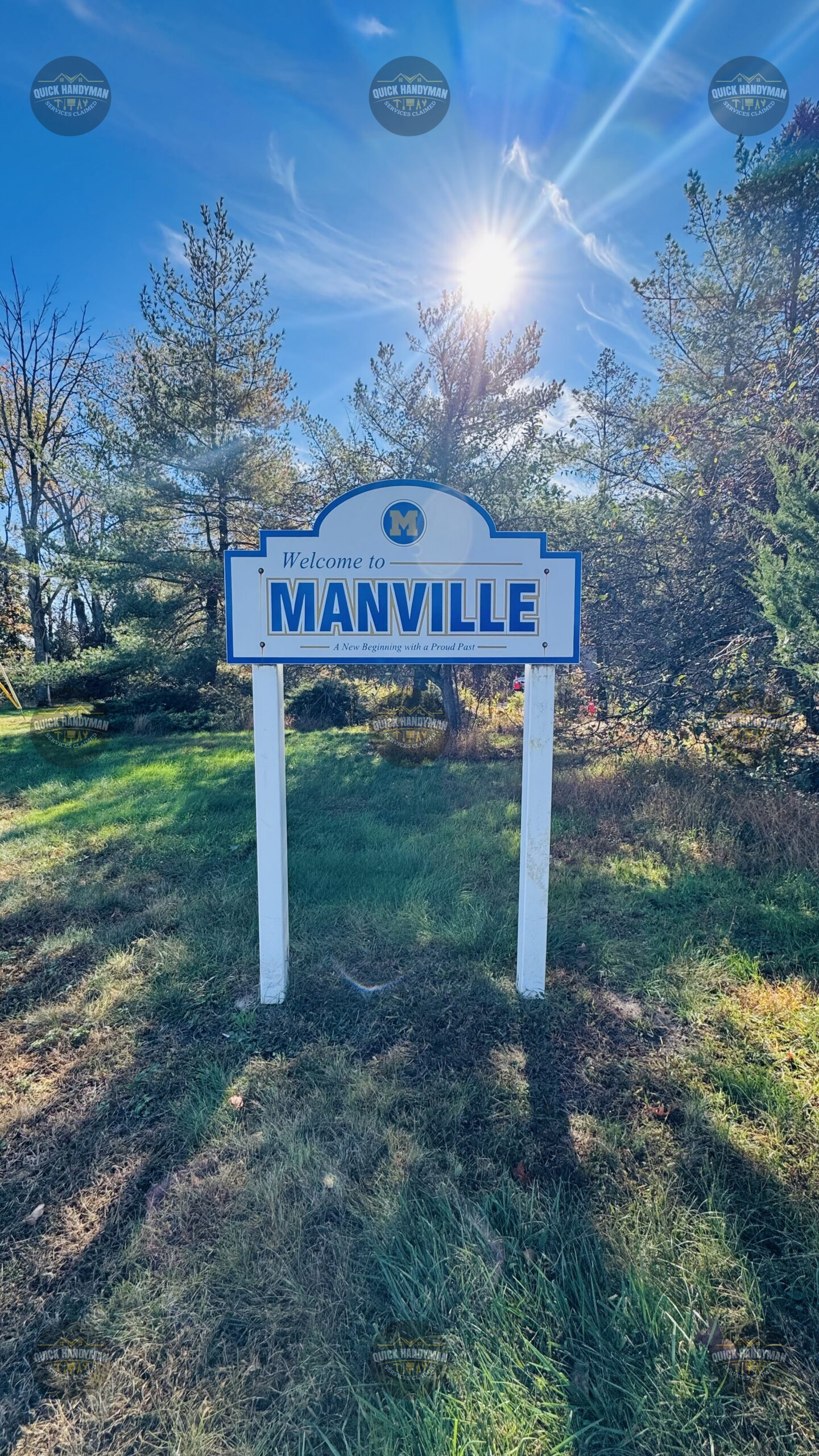
History of Manville Borough, New Jersey
Early roots along the rivers
Manville’s history began long before it became an independent municipality. The land that now forms the borough was once part of Hillsborough Township, where farming shaped the landscape and daily life. Its position near the meeting of the Raritan and Millstone Rivers connected the area with the wider agricultural and commercial life of Somerset County.
The borough’s official history describes local involvement in the Revolutionary War era, including military movements, raids and skirmishes in the surrounding area. After the war, agricultural life continued. Rivers, roads and the developing regional transportation network would later help make this quiet farming community attractive to industry.
The industrial transformation
A major turning point came in 1912, when the Johns-Manville Company selected land here for a manufacturing plant. The company’s arrival transformed the community’s economy and physical character. Access to rail transportation, waterways and roads helped support the movement of industrial materials and manufactured products.
As the factory expanded, workers arrived and demand for housing increased. The settlement grew beyond its agricultural beginnings, with homes and commercial development appearing near the industrial facilities. The name Manville became closely associated with the company that helped drive this transformation.
Workers and a growing community
Industrial employment attracted people from different backgrounds. A historical account republished in the borough’s March 2026 newsletter describes European immigrants arriving from New England mill communities and Pennsylvania mining areas, along with workers traveling from other New Jersey communities and neighboring states.
These arrivals helped create a community of many nationalities and languages. Manville’s development was therefore more than the construction of a factory: it also involved families establishing homes and building a shared community around new employment opportunities.
Becoming Manville Borough in 1929
As the settlement grew, residents sought a municipal identity separate from Hillsborough Township. Petitions and public meetings helped advance the movement toward independence.
The legislation creating Manville Borough passed on April 1, 1929. A referendum that year approved the establishment of the separate municipality. The borough’s historical newsletter records that its first mayor and council were elected on May 14, 1929. The new municipality took its name from Johns-Manville and established its own local government.
Industry, Main Street and change
Manufacturing continued to influence Manville during the twentieth century. The borough’s master-plan reexamination identifies the 1950s and 1960s as a prosperous period for the factory and the Main Street business district.
The same planning document also recognizes the difficult legacy associated with asbestos production and its health effects. A balanced account of Manville’s past includes both the economic opportunities created by industrial employment and the consequences that became part of the community’s later history.
Flooding and resilience
The rivers that helped shape Manville’s location have also brought serious challenges. Municipal emergency-management information identifies major flooding associated with Floyd in 1999, Irene in 2011 and Ida in 2021.
These events form an important part of the borough’s modern history. Flood awareness, emergency communication and recovery have become significant concerns for residents and local government.
Manville’s identity today
Manville retains a small-town character within Somerset County and the Raritan Valley. Its community life includes recreation, civic gatherings and local traditions, while its streets and neighborhoods reflect generations of change.
Understanding Manville means looking beyond its incorporation date. Its story connects agricultural roots, industrial growth, immigration, municipal independence and the continuing efforts of residents to sustain their community.